Blueberry Lemon Sourdough Bread
Highlighted under: Classic Ideas
I absolutely love baking, and this Blueberry Lemon Sourdough Bread has quickly become one of my favorites. The tangy sourdough complements the sweet blueberries while the fresh lemon zest brightens every bite. I admire how the fermentation process brings depth to the flavors, making this bread a delightful treat. Whether toasted for breakfast or enjoyed as an afternoon snack, it’s a recipe that brings a smile to my face every time I make it.
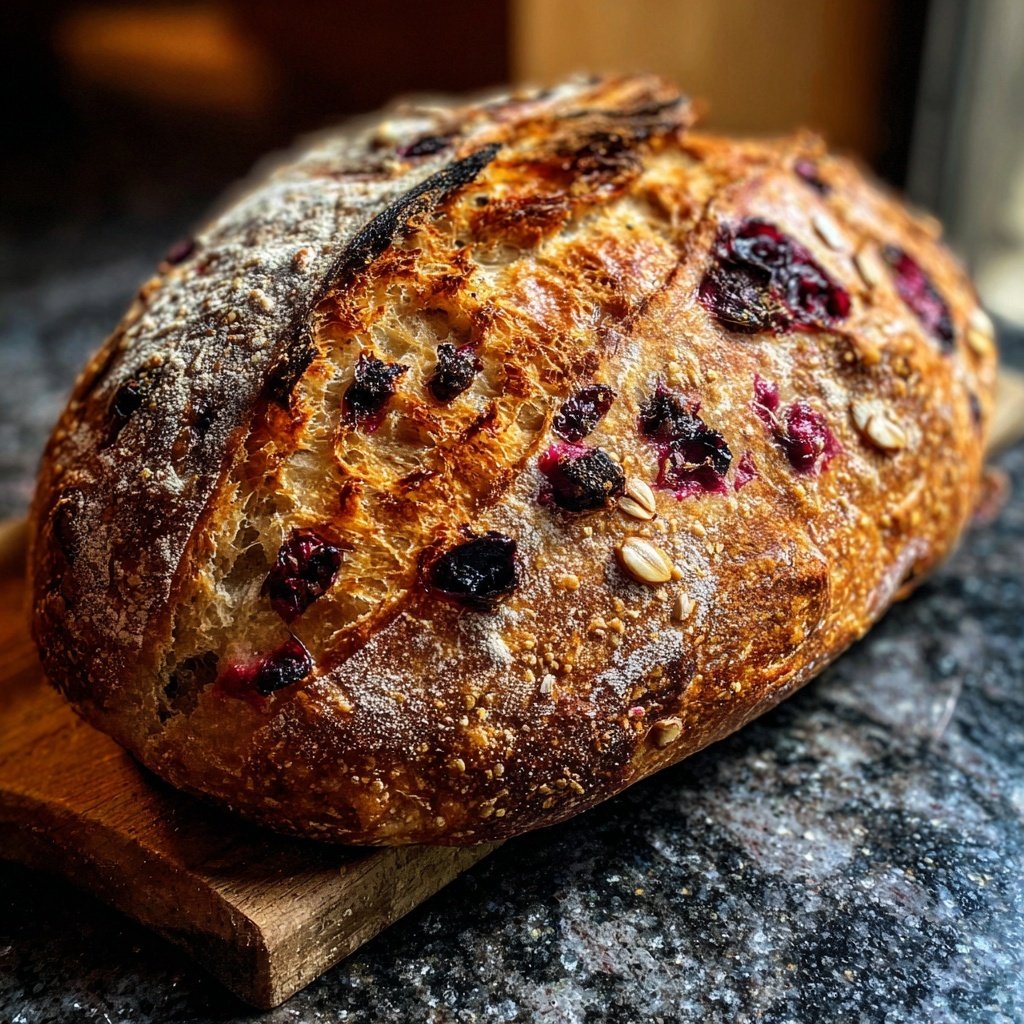
When I first experimented with blueberry and lemon in sourdough, I couldn't believe how well they complemented each other. The sourdough base gives a hearty structure, while the blueberries and lemon add a burst of freshness. I found that incorporating the lemon zest during the initial mixing helps distribute the flavor more evenly.
One of my best tips is to use fresh blueberries, as frozen ones may release too much moisture. During baking, I enjoy the enticing aroma that fills my kitchen, a prelude to the deliciousness that awaits. This bread is a culinary journey worth every effort!
Why You'll Love This Recipe
- The perfect balance of tart and sweet flavors
- A unique twist on traditional sourdough bread
- Ideal for brunch or as a snack any time of the day
The Role of Sourdough Starter
Your sourdough starter is the star of this recipe, providing both leavening and distinct flavor. An active and bubbly starter with a well-timed feeding will help ensure your dough rises properly. If your starter has been sitting in the fridge, take it out 4-6 hours before beginning the recipe to wake it up and make sure it’s bubbly. This will help you achieve that perfect airy texture in your bread.
The acidity in the sourdough also plays a vital role in balancing flavors. It enhances the sweetness of the blueberries and the brightness of the lemon, ensuring a harmonious blend in each slice. For a milder flavor, you can use a less fermented starter, which will produce a more subtle tang.
Handling the Blueberries
When incorporating the blueberries, be gentle! These delicate fruits can burst easily and release moisture into your dough, affecting the final texture. Fold them in carefully just before the bulk fermentation step. If you prefer, you can lightly dust the blueberries with flour before adding them to the dough to help absorb some moisture during baking.
Another tip is to opt for frozen blueberries if fresh ones aren't available. Just be sure to add them straight from the freezer to avoid thawing and excess moisture. This can also create lovely bursts of color throughout the bread once baked!
Storage and Serving Suggestions
Once your Blueberry Lemon Sourdough Bread has cooled, store it in a paper bag at room temperature to maintain a soft crust, or wrap it tightly in plastic wrap for longer storage. It will stay fresh for about 3 days. For extended storage, consider slicing the bread and freezing individual pieces, which makes for quick toasting or snacking later on.
This bread is incredibly versatile! Enjoy it toasted with a smear of butter and a sprinkle of sugar for breakfast, or pair it with cream cheese and a drizzle of honey for an afternoon treat. You can even use it for french toast, allowing the fruity flavors to come alive in each delicious bite.
Ingredients
For the Bread
- 1 cup sourdough starter, active and bubbly
- 1 1/2 cups all-purpose flour
- 1/2 teaspoon salt
- 1 tablespoon sugar
- 1/2 cup warm water
- 1 tablespoon lemon zest
- 1 cup fresh blueberries
Mix the ingredients well before using them.

Instructions
Mix the Dough
In a large bowl, combine the active sourdough starter, warm water, and sugar. Mix in the flour and salt until a rough dough forms. Gently fold in the lemon zest and blueberries, making sure not to burst the berries.
Bulk Fermentation
Cover the bowl with a damp cloth and let the dough rise at room temperature for about 4 hours or until doubled in size. Stretch and fold the dough every hour to build strength.
Shape and Rest
Once the dough has risen, turn it out onto a lightly floured surface. Shape it into a round loaf and place it in a floured proofing basket. Cover it and let it rest for 30 minutes.
Preheat the Oven
While the dough is resting, preheat your oven to 450°F (230°C) with a baking stone or Dutch oven inside.
Bake the Bread
Carefully transfer the risen dough onto the preheated stone or into the Dutch oven. Bake for 30-40 minutes until the crust is golden brown and sounds hollow when tapped.
Cool and Enjoy
Once baked, remove the bread from the oven and let it cool on a wire rack for at least 30 minutes before slicing.
Enjoy your delicious Blueberry Lemon Sourdough Bread!
Pro Tips
- For extra flavor, consider adding a tablespoon of dried lavender or rosemary alongside the lemon zest.
Tips for Perfect Texture
Achieving the right texture is crucial in sourdough bread. During the bulk fermentation, look for a glossy surface and a bubbly structure, which indicates that the dough is developing well. If the dough isn’t showing these signs after four hours, extend the fermentation time in one-hour increments, monitoring closely until it doubles in size.
For shaping your dough, make sure to follow proper technique: gently stretch and fold to maintain the gas bubbles. This not only builds strength but ensures that the final bread remains light and airy.
Troubleshooting Common Issues
If your bread fails to rise, it could be due to an inactive starter. Always perform the 'float test' before starting—take a small spoonful of your starter and drop it in a glass of water. If it floats, it’s ready to use; if not, feed it and wait a few more hours. Temperature also plays a role; ensure your dough is in a warm place for optimal fermentation.
Should you encounter a dense loaf, it’s often a sign of under-fermentation or over-handling. Adjust your timing for the bulk fermentation, pay attention to how the dough feels, and don’t rush the folds. Remember, patience is key with sourdough!
Creative Variations
Feel free to experiment with flavors in this recipe! Try substituting the blueberries with raspberries or chopped strawberries for a fruity twist. You can also add spices like cinnamon or nutmeg to enhance the flavor profile further.
If you love nuts, incorporating pecans or walnuts can provide a lovely crunch and earthy flavor that complements the sweetness of the fruit. Just be mindful of adjusting the moisture level since nuts absorb some of the dough's hydration.
Questions About Recipes
→ Can I use frozen blueberries?
Yes, but be aware they might make the dough wetter. Pat them dry before adding them to the dough.
→ How long does this bread last?
It can stay fresh at room temperature for about 2-3 days. For longer storage, freeze the slices individually.
→ Can I make this recipe without a sourdough starter?
This recipe specifically requires a sourdough starter for fermentation and flavor, but you can experiment with other breads if you prefer.
→ What can I serve with this bread?
Enjoy it plain, with butter, or as an accompaniment to a cheese platter. It pairs excellently with lemon curd or cream cheese.
Blueberry Lemon Sourdough Bread
Created by: Unity Caldwell
Recipe Type: Classic Ideas
Skill Level: Intermediate
Final Quantity: 1 loaf
What You'll Need
For the Bread
- 1 cup sourdough starter, active and bubbly
- 1 1/2 cups all-purpose flour
- 1/2 teaspoon salt
- 1 tablespoon sugar
- 1/2 cup warm water
- 1 tablespoon lemon zest
- 1 cup fresh blueberries
How-To Steps
In a large bowl, combine the active sourdough starter, warm water, and sugar. Mix in the flour and salt until a rough dough forms. Gently fold in the lemon zest and blueberries, making sure not to burst the berries.
Cover the bowl with a damp cloth and let the dough rise at room temperature for about 4 hours or until doubled in size. Stretch and fold the dough every hour to build strength.
Once the dough has risen, turn it out onto a lightly floured surface. Shape it into a round loaf and place it in a floured proofing basket. Cover it and let it rest for 30 minutes.
While the dough is resting, preheat your oven to 450°F (230°C) with a baking stone or Dutch oven inside.
Carefully transfer the risen dough onto the preheated stone or into the Dutch oven. Bake for 30-40 minutes until the crust is golden brown and sounds hollow when tapped.
Once baked, remove the bread from the oven and let it cool on a wire rack for at least 30 minutes before slicing.
Extra Tips
- For extra flavor, consider adding a tablespoon of dried lavender or rosemary alongside the lemon zest.
Nutritional Breakdown (Per Serving)
- Calories: 350 kcal
- Total Fat: 7g
- Saturated Fat: 1g
- Cholesterol: 0mg
- Sodium: 35mg
- Total Carbohydrates: 66g
- Dietary Fiber: 3g
- Sugars: 12g
- Protein: 9g